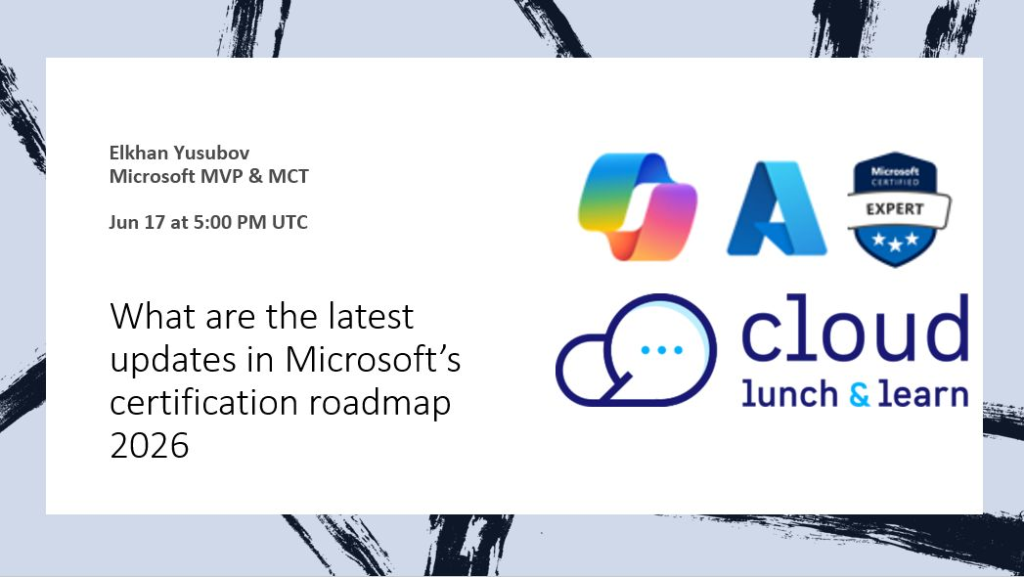
It might feel a bit overwhelming on where you should start or continue your Cloud and AI learning journey to stay ahead of the competition. This blog post reflects on my recent Cloud Lunch and Learn session that targets to answer and help you with this question.
Where should you start?
Note: If you are more interested in watching the session then please check this session below:
Artificial Intelligence is no longer something we simply read about in tech news.
It is already here.
It is in our productivity tools. It is in our cloud platforms. It is in our security workflows. It is in our data platforms. It is changing how developers build, how administrators operate, how architects design, and how business users make decisions.
And here is the exciting part: you do not need to be an AI expert to start your AI learning journey. You just need curiosity, consistency, and the right roadmap.
I always believe that one of the best ways to grow in technology is to make learning practical, simple, and accessible. That is why I am excited to host a beginner-friendly community session focused on the Microsoft AI certification roadmap in 2026.
What this session covers?
We focus on key Microsoft AI learning paths, including Azure AI Fundamentals, role-based AI certifications, Microsoft Applied Skills, and how AI connects with Azure, Microsoft Foundry, Copilot, Data, Security, DevOps, and business transformation.
The goal is not just to earn another certification and badge. Our goal is to build confidence, validate real-world skills, and prepare for the AI-powered workplace.
As always, if you are new to AI, start with the fundamentals. If you already work in cloud, DevOps, data, security, or development, this is your opportunity to connect your existing skills with modern AI solutions.
Learning AI may feel overwhelming, but it does not have to be. Start small, stay consistent, use Microsoft Learn, join community sessions, and keep growing one step at a time.
what is AI Skills Navigator?
In addition, check out the new Microsoft AI Skills Navigator portal. It is designed as a guided, personalized AI learning platform that helps new learners start and grow their AI journey with clarity and confidence. In simple terms, it helps learners to understand what to learn, follow the right path, and build real AI skills, without getting lost in the internet.
Remember, learning is a marathon, not a sprint. See you in the session, Cloud Marathoners!
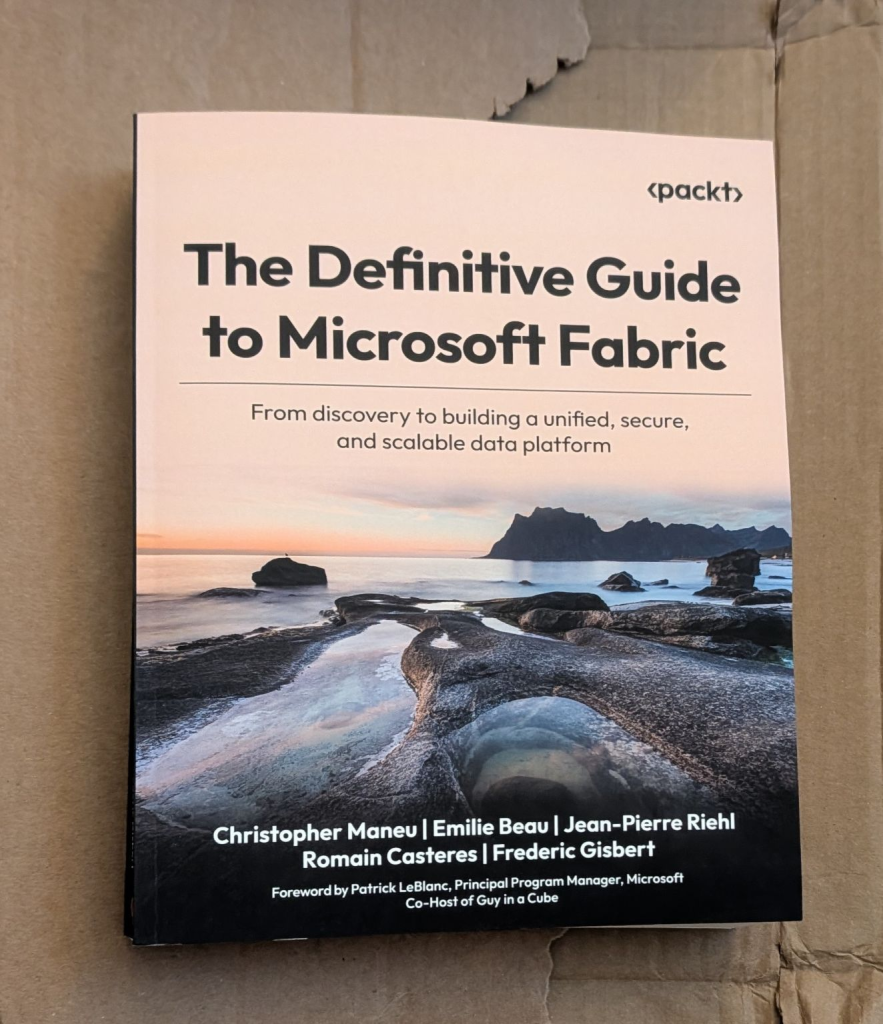
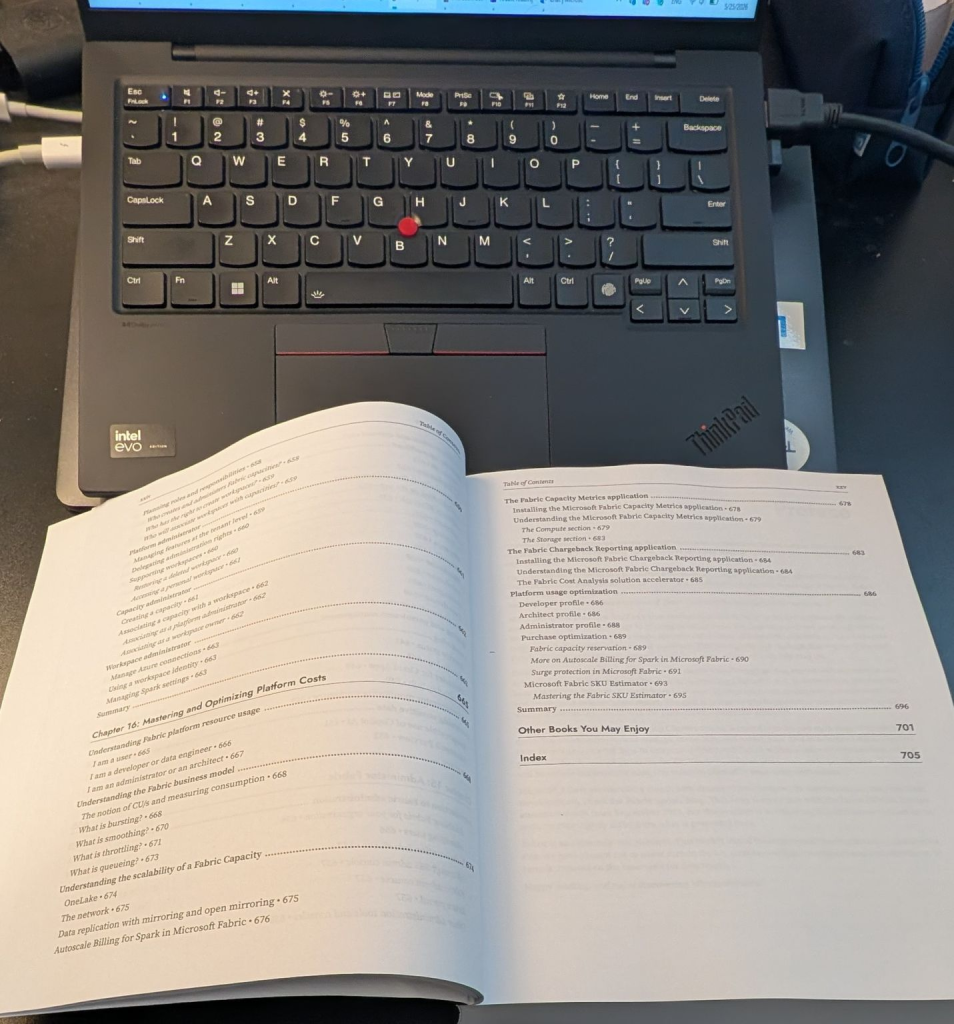
I got an opportunity to work with Packt publishing to review a new book on Microsoft Fabric. I am excited to share my first impression and announce a giveaway for three lucky #CloudMarathoner community members who can get this book via raffle on June 5th.
Brief A Cloud Marathoner Review
There is a moment many of us have experienced. You spend hours following a tutorial. Step by step. Everything works. You feel productive. And then… a few days later, you realize something is off.
You need to start over. Not because you did something wrong—but because you didn’t fully understand what you built.
If this sounds familiar, you’re not alone. And honestly, this is one of the biggest silent lessons in tech: speed without understanding often leads to rework.
That is exactly why The Definitive Guide to Microsoft Fabric caught my attention—and why I wanted to share it with the Cloud Marathoner community.
What is Microsoft Fabric?
Let’s simplify it: Microsoft Fabric is a unified data and analytics platform.
Instead of working with multiple disconnected services, Fabric brings everything together; data ingestion, storage, transformation, analytics, AI, and visualization—into a single integrated experience.
Think about it this way:
One place to store your data (OneLake)
One platform to process and transform it
One ecosystem to build insights, reports, and intelligent solutions
Microsoft Fabric includes capabilities like:
Data Factory (data integration)
Data Engineering & Data Science
Real-Time Analytics
Data Warehouse
Power BI for visualization
The biggest shift here is not just about tools—it’s about mindset:
Moving from fragmented solutions to a unified, scalable, and governed data platform.
And that is where many people struggle with understanding how everything fits together in Microsoft Fabric.
How to WIN the book raffle
As part of the Cloud Marathoner journey, I always try to give back to the community—not just through content, but through opportunities. For this book, I organized a simple giveaway:
🎯 3 lucky winners received a free copy
To participate, community members could:
Liked 👍 the post
Commented 💬
Reposted ♻️
Why do I do this?
Well, because learning should be accessible. Sometimes, the difference between “I want to learn this” and “I actually started” is a single opportunity—a book, a resource, a push, or a community moment.
As my dear friends, you know that Cloud Marathoner is not just about content. It is more about:
Encouraging continuous learning
Supporting each other’s journeys
Creating opportunities together
And as always, we grow faster when we grow together by helping each other to keep the momentum rolling.
What is covered in this book
What makes this book stand out is the depth and structure. It doesn’t just teach how to use Microsoft Fabric, it goes well beyond by explains why things work the way they do. Basically, this book takes you on a full journey by beginning with:
🔹 Foundations and Getting Started
It starts with What Microsoft Fabric is?
Core architecture concepts
Real-world use cases
Setting up your first environment
Next it continues with the most important sections of OneLake and UDD:
🔹 OneLake and Unified Data Design
The lakehouse concept
Data organization strategies
OneLake as the unified data layer
Governance and security structures
Data mesh architecture approaches
🔹 Data Ingestion & Transformation
This section explores multiple approaches to ingesting and shaping data where you learn practical and applicable scenarios in real-world:
Pipelines and orchestration
Notebooks (Spark-based engineering)
Real-time ingestion
Dataflows (low-code transformations)
SQL and Spark transformations
Even AI-assisted workflows with Copilot
Then it follows with a section that helps you stop guessing and start making informed decisions.
🔹 Analytics, Real-Time Processing, and Architecture Decisions
Differences between data warehouse and lakehouse
Real-time analytics and event streaming
Time-series data and alerting patterns
When to use which architectural pattern
🔹 Advanced Topics: AI, Governance, and Optimization
Finally, the book goes beyond building solutions by focusing on each aspect of your solution(s):
AI and machine learning integration
Semantic modeling and reporting
Governance and compliance
Security best practices
Cost optimization at scale
DevOps & DataOps principles
This is what transforms a solution into a production-ready platform.
Who will benefit from this book
This book is designed for a wide range of learners, including but not limited to:
Data engineers
Analytics engineers
Cloud and data architects
Analysts moving into design roles
Technical leaders working on modern data platforms
From a Cloud Marathoner perspective, I would break it down to simple three roles that you might associated with. Namely; Beginner. Practitioner and more advanced role such as Architect.
You will like this book as beginner, if you’re overwhelmed by scattered tutorials, this book gives you structure and clarity.
You will like this book as practitioner, if you already work in Azure, Power BI, or data platforms, this helps you connect the dots across services.
You will like this book as architect, if you design systems, this book helps you think in terms of:
scalability
governance
platform design
long-term strategy
You don’t need to know everything to start, just a basic understanding of databases, SQL, and Python would be enough to get started.
🏁 𝗖𝗹𝗼𝘂𝗱 𝗠𝗮𝗿𝗮𝘁𝗵𝗼𝗻𝗲𝗿 𝘁𝗮𝗸𝗲𝗮𝘄𝗮𝘆
Here is the biggest lesson I took from this book:
Don’t just follow steps — understand the system.
In my experience, the people who grow fastest in tech are not the ones who complete the most tutorials. They are the ones who take time to understand the “why” behind the “how.”
This book reinforces something I believe deeply:
Strong fundamentals = less rework
Better understanding = better decisions
Deep learning = long-term confidence
And that aligns perfectly with the Cloud Marathoner mindset:
🏃 Learn deeply 🔁 Improve continuously 🎯 Build with confidence
Because in the end, this is not a sprint. It’s a marathon.
💬 Keep me posted with your feedback
Are you currently learning Microsoft Fabric?
What challenges are you facing?
Have you ever had to redo work because of missing fundamentals?
Drop your thoughts, share your journey, and let’s keep building together.
Because every step forward, no matter how small or tiny, is part of the progress in your brave marathon!
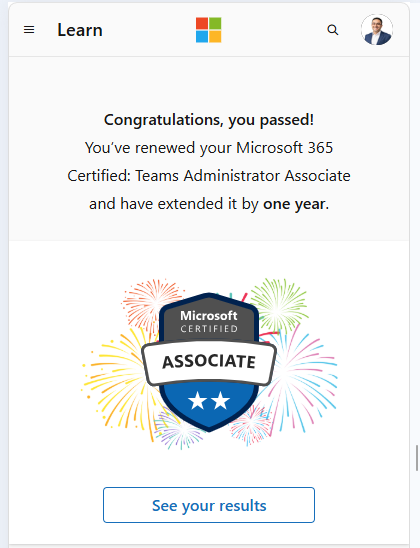
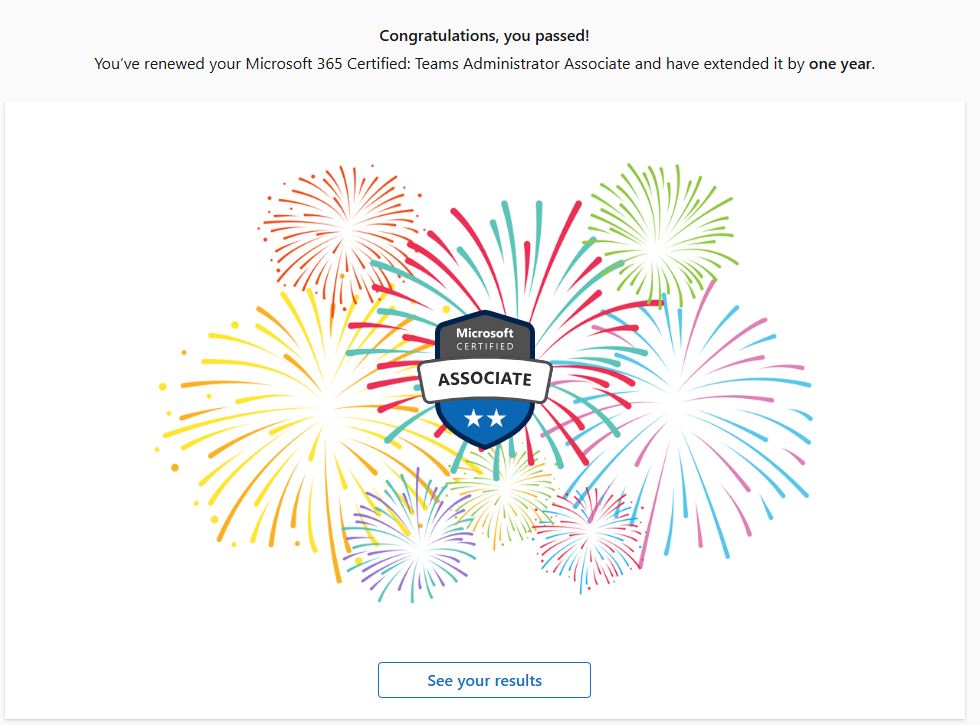
I’m excited to share another milestone in my continuous learning journey. I’ve successfully passed the MS-700: Microsoft Teams Administrator Associate renewal assessment! As a Microsoft Azure MVP and MCT, staying current isn’t just a requirement … It’s a commitment to the community, the platform, and the pace of innovation we all run together.
This renewal wasn’t just about ticking a box (for the 4th consecutive year), but it was an opportunity to revisit core Teams administration concepts, explore new capabilities, and sharpen practical skills that directly impact real-world deployments.
Let’s break it down 👇
Why Renewal Is Important
Microsoft certifications are valid for one year, and renewal ensures your skills stay aligned with the latest Microsoft Teams updates. The renewal process is free, online, and proctored, perfect for professionals who want flexibility without scheduling hassles.
Eligibility: You can renew within six months before expiration.
Assessment: A short, open-book online assessment focused on recent Power BI updates.
Skills Measured: (here are the key skills measured)
✅ Implement compliance for Microsoft Teams
✅ Implement lifecycle management and governance
✅ Manage external access and guest collaboration
✅ Configure and manage Teams devices
✅ Manage chat and channel collaboration experiences
✅ Manage Teams apps and app governance
✅ Plan for Teams Phone
✅ Configure auto attendants and call queues
These domains align closely with real-world scenarios, especially for architects and admins designing secure, scalable collaboration platforms.
Validity of the renewal: Passing extends your certification by one year. No attempts limitations to renew: Unlimited until expiration, with a 24-hour wait between retakes.
📚 Prepare in Cloud Marathoner Style
Here’s exactly how I approached it, without any shortcuts, just smart strategy:
1️⃣ Start with Official Microsoft Learning Content
✅ Tip: Don’t just read the material, try map features to real-world use cases.
2️⃣ Think Like an Architect, Not Just an Admin
Ask yourself the following:
How do I control Teams sprawl?
What’s the difference between sensitivity labels vs Teams policies?
When should I use Guest Access vs External Access vs Shared Channels?
How do voice solutions integrate with existing infrastructure?
3️⃣ Hands-On Practice (Non-Negotiable)
If you’re not testing your skills, you’re simply guessing. Spin up or use an existing tenant and practice:
Creating Teams policies
Configuring retention & compliance settings
Setting up auto attendants and call queues
Managing Teams apps permissions and governance
Assigning Teams Phone licenses and numbers
4️⃣ Focus on What’s Changed
Renewals are about what’s new and evolving, not just fundamentals. Pay attention to:
Shared channels and cross-tenant collaboration
Enhanced governance controls
Teams Premium features (where applicable)
Updates in device management and provisioning
🧠 My Key Learning Insights
🔐 Compliance is No Longer Optional
Understanding retention policies, eDiscovery, and DLP is critical—not just for compliance teams, but for Teams admins.
🌍 External Collaboration is a Strategy
It’s not just “enable guest access.” but you expected to make balance in:
Security
User experience
Business collaboration needs
📞 Teams Phone is Growing Fast
Voice workloads are becoming central for customers, so:
Auto attendants
Call queues
Phone number management
Direct routing & calling plans
Even if you’re not a voice engineer, you need foundational knowledge.
📱 Devices Matter More Than Ever
From Teams Rooms to desk phones, these are critical for hybrid work success.:
Device policies
Remote provisioning
Firmware management
🏁 Final Thoughts
Renewing MS-700 isn’t just about staying certified, but it’s about staying relevant to customer needs. As Cloud Marathoners, we don’t sprint—we build endurance:
Continuous learning
Real-world application
Sharing knowledge with the community
📣 Call to Action
If you’re planning your MS-700 renewal:
✅ Start today ✅ Use Microsoft Learn ✅ Practice hands-on ✅ Think in scenarios, not definitions
And most importantly… 👉 Run your own race—but don’t run alone. Let’s keep learning, building, and growing together.
🙌 Let’s Connect
If you’ve recently renewed your MS-700 or are preparing:
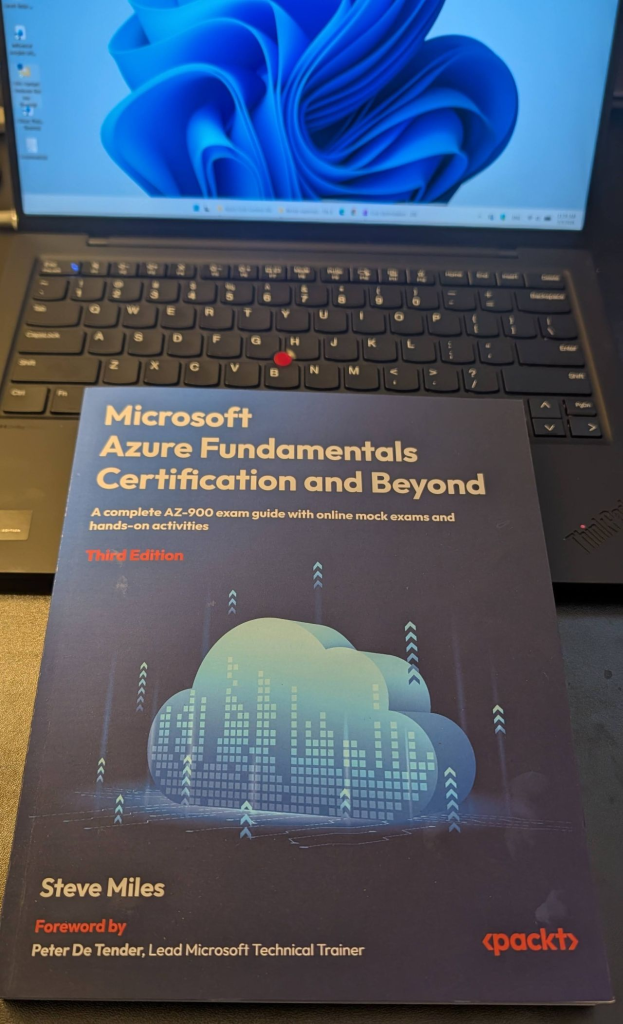
If you’re starting your #Azure journey or guiding someone toward their first cloud certification, then this book deserves a spot on your desk.
what is Microsoft Azure Fundamentals?
✅ Microsoft Azure Fundamentals is fully aligned with the January 2026 AZ‑900 skills update and does an excellent job of going beyond rote exam prep and into a real understanding of the cloud world.
I received this interesting book, “Microsoft Azure Fundamentals Certification and Beyond”, from Packt, authored by Steve Miles, Microsoft Azure & AI MVP and MCT.
How to win the book ruffle
[Spoiler] By liking 👍, commenting 💬, and reposting ♻ on this post, the 3️⃣ lucky people will get an opportunity to receive a complimentary (#free) copy of the book next week.
🎯 You will be added to the pot for drawing till next Monday (May 11th)
what is covered in the book?
🔍 𝗪𝗵𝗮𝘁’𝘀 𝗜𝗻𝘀𝗶𝗱𝗲: 🔹Clear, beginner‑friendly explanations using real-world Azure scenarios and analogies—not just definitions 🔹Solid coverage of cloud concepts, Azure architecture, core services, security, governance, and cost management in one place 🔹Strong emphasis on why and how Azure services are used—not just what they are 🔹Built‑in access to mock exams, flashcards, exam timers, and hands‑on labs, which is huge for confidence building before test day.
who will benefit from this book
🎯 Who this book is for: ✔️ AZ‑900 candidates with no prior cloud experience ✔️ Career switchers and students entering cloud roles ✔️ Non‑technical and technical professionals who want a solid Azure foundation ✔️ Anyone who wants skills that translate to real projects, not just passing an exam
🏁 𝗖𝗹𝗼𝘂𝗱 𝗠𝗮𝗿𝗮𝘁𝗵𝗼𝗻𝗲𝗿 𝘁𝗮𝗸𝗲𝗮𝘄𝗮𝘆
This book treats the AZ‑900 not as the finish line, but as the starting line. If your goal is to understand Azure well enough to have meaningful conversations, make smart decisions, and confidently take your first steps into cloud roles, this guide delivers.
If you’re mentoring newcomers, teaching fundamentals, or leveling up yourself, this is a resource worth recommending.
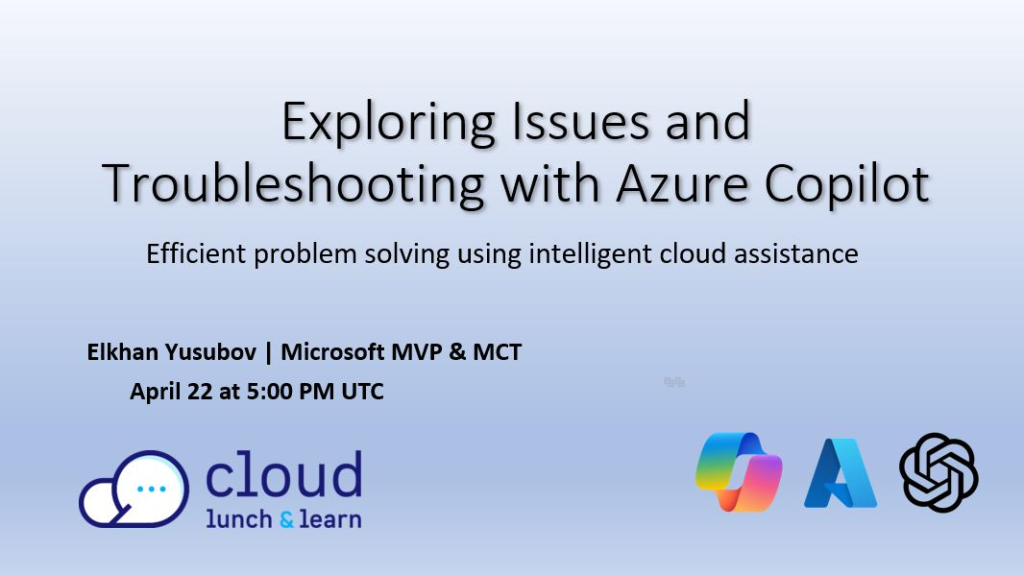
We have a new Cloud Lunch and Learn session dedicated to help you troubleshoot the Cloud platform issues with less hassle by understanding and using Azure Copilot insights.
what is azure copliot?
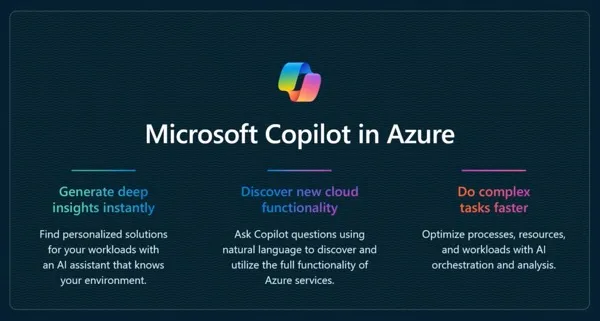
In short, Azure Copilot helps you to investigate and troubleshoot issues with AI-enhanced operations. In fact, you can ask Azure Copilot for help with designing, operating, optimizing, and troubleshooting your Azure apps and infrastructure. Azure Copilot is there to help you and orchestrate data across both the cloud and the edge services.
This session comes with a hands‑on session at Cloud Lunch and Learn, where we explore how #Azure Copilot can help you troubleshoot faster and with more confidence.
🔍 𝗪𝗵𝗮𝘁 𝘆𝗼𝘂’𝗹𝗹 𝗹𝗲𝗮𝗿𝗻: ✅ How Azure Copilot supports issue detection, analysis, and remediation ✅ How Copilot interprets logs, metrics, and alerts to surface real root causes ✅ Troubleshooting networking, identity, and deployment issues with live demos ✅ Using natural language prompts effectively (and safely) ✅ How to validate Copilot’s recommendations using Azure Monitor and diagnostics ✅ Why trust‑but‑verify is the most important troubleshooting mindset
💡 This session is all about pairing AI‑driven insights with proven Azure troubleshooting practices — so you can reduce Mean Time to Repair (MTTR) without losing control or confidence 😉
Manage access to Azure Copilot
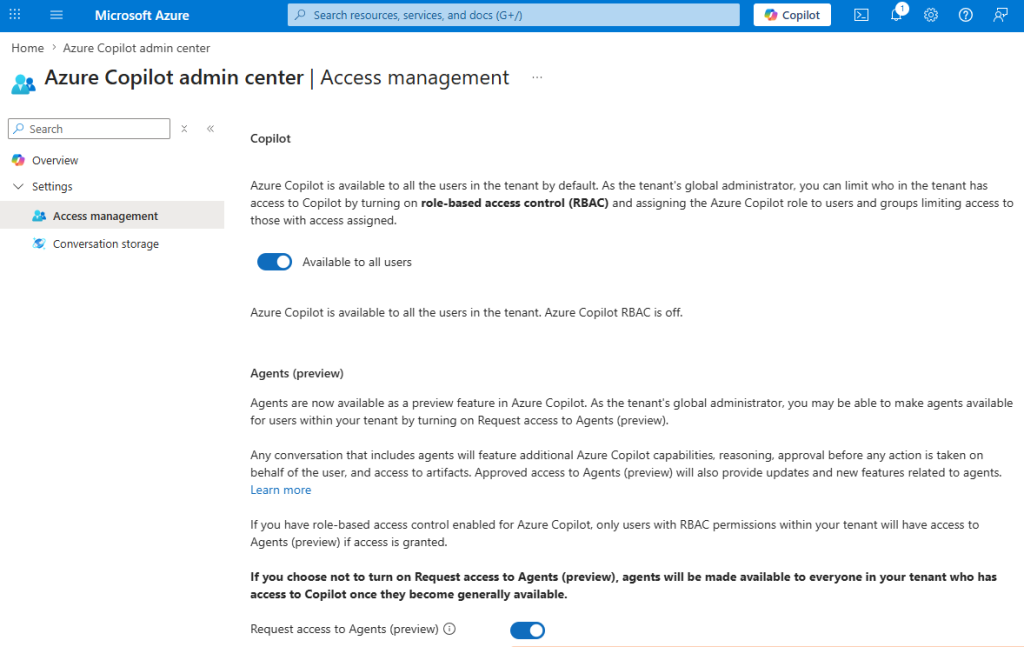
By default, Azure Copilot is available to everyone in the tenant. However, your tenant’s global administrator can limit who in the tenant has access to Copilot. This could be done by by turning on role-based access control (RBAC) and assigning the Azure Copilot role to users and groups limiting access to those with access assigned.
Demo #1 – enabling access
Description, steps and screenshots are coming soon
Demo #2 – IdentifyinG your active VMs
Description, steps and screenshots are coming soon
resources
| where type =~ 'Microsoft.Compute/virtualMachines'
| extend powerState = tostring(properties.extended.instanceView.powerState.code)
| where powerState == 'PowerState/running'
| project name, resourceGroup, location, powerState, subscriptionId
Demo #3 – Identifying failed sign-in and deployment logs
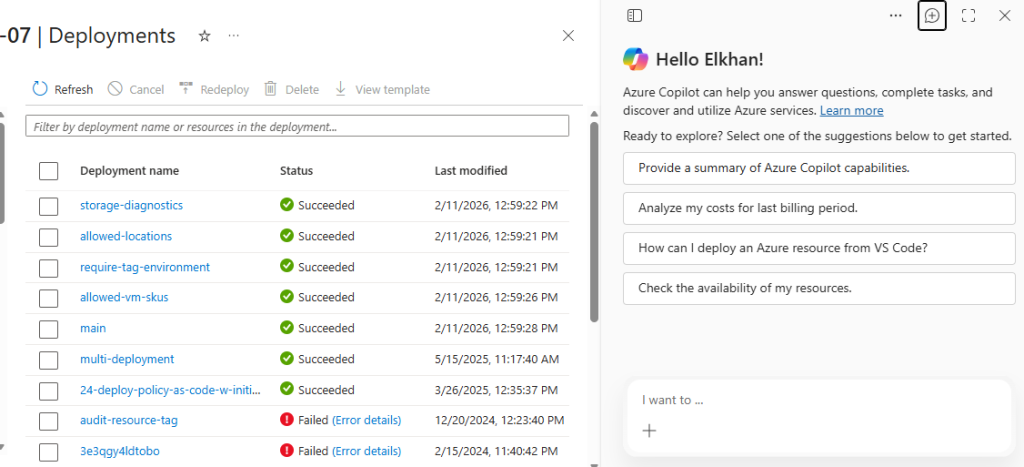
Description of prompt, tests and results
What are the last three deployment failures in my subscription?
Completed blog is coming soon … right after the demo session is published
Every year, Azure Spring Clean reminds us of an important truth: running Azure well isn’t about adding more services—it’s about operating smarter. As environments grow, so do the challenges:
Visibility becomes fragmented
Governance drifts over time
Costs quietly creep up
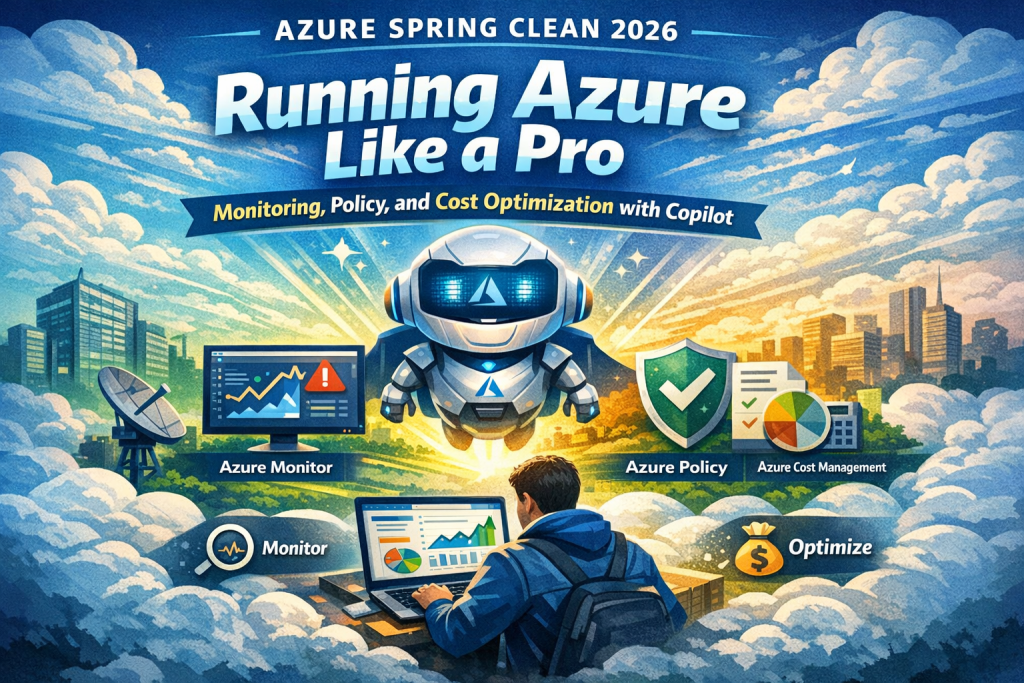
That’s exactly why I’m excited to be part of Azure Spring Clean 2026 with my session and thank you for reading this blog.
In this session, my focus it turned to all about practical, real‑world cloud operations. And how Azure Copilot can help cloud professionals cut through noise and make better decisions, faster.
Why Azure Spring Clean?
Azure Spring Clean is more than an event—it’s a mindset. It’s about:
Cleaning up technical debt
Improving operational habits
Sharing real lessons from the field
Thank you to all organizers, including Joe and Thomas for running this community event this year. Your leadership is appreciated 🙌🙌🙌
I’m proud to contribute a session that focuses on operational excellence, not just shiny new features.
Why “Running Azure Like a Pro” Matters
Anyone can deploy resources. Professionals know how to operate them—day after day, at scale.
In real Azure environments, teams struggle with questions like:
Why did this workload suddenly spike in cost?
Which resources are out of compliance—and why?
Where should I look first when something breaks?
These aren’t design‑time questions. They’re daily operational challenges.
Azure Copilot introduces a new way to approach them—by turning raw data into actionable insights, using natural language and context across your Azure environment.
What This Session Covers
This isn’t theory. It’s hands‑on, scenario‑driven learning—the Cloud Marathoner way.
🔍 Monitoring with Confidence
We’ll explore how Copilot helps you:
Navigate Azure Monitor signals faster
Ask questions in plain language instead of digging through dashboards
Identify issues before they become incidents
Monitoring isn’t about staring at charts—it’s about knowing where to look and why.
🛡️ Governance That Actually Works
Policies are only useful if people understand and act on them. Thus, in this session, you’ll see how Copilot can:
Explain policy compliance issues in human terms
Help investigate non‑compliant resources
Support better governance conversations with teams and stakeholders
Governance shouldn’t slow teams down—it should guide them forward.
💰 Cost Optimization Without Guesswork
Cost management is often reactive. Copilot helps make it proactive. We’ll walk through scenarios where Copilot assists with:
Identifying cost anomalies
Understanding spending patterns
Supporting confident optimization decisions
No spreadsheets. No guesswork. Just clear insights you can act on.
Architects responsible for governance and optimization
Anyone who wants to spend less time searching and more time solving problems
Whether you’re early in your cloud journey or running complex environments, this session will help you level up your operational mindset.
Demo
Please, check this section in a few days, the demo is being re-recorded for better quality. In-Progress …
Final Thought 🏃♂️
Running Azure is a marathon, not a sprint.
With the right visibility, strong governance, smart cost controls—and now Copilot as your operational assistant—you can move faster without losing control.
If you want to run Azure like a pro, I hope you’ll join me at Azure Spring Clean 2026.
Let’s clean up, optimize, and keep moving forward—together.
I’m honored to be re-selected as 𝗠𝗖𝗧 𝗖𝗼𝗺𝗺𝘂𝗻𝗶𝘁𝘆 𝗟𝗲𝗮𝗱 for the 𝘁𝗵𝗶𝗿𝗱 𝘆𝗲𝗮𝗿 𝗶𝗻 𝗮 𝗿𝗼𝘄 — and this one feels extra special: it marks my 𝟭𝟵𝘁𝗵 𝘆𝗲𝗮𝗿 𝗮𝘀 𝗮 𝗠𝗶𝗰𝗿𝗼𝘀𝗼𝗳𝘁 𝗖𝗲𝗿𝘁𝗶𝗳𝗶𝗲𝗱 𝗧𝗿𝗮𝗶𝗻𝗲𝗿.
What began as a small feather in my cap has grown into a cornerstone of my career. From Windows, .NET Developer to Microsoft Azure, the journey has been all about always learning, always teaching, and blending lessons from real customer projects into practical, hands-on guidance for the community.
To everyone who’s paced with me—mentees, peers, customers, and fellow Cloud Marathoners — 𝘁𝗵𝗮𝗻𝗸 𝘆𝗼𝘂 for the miles we’ve logged together.
The next chapter is calling (I might have to ask my agent(!) which one it is 😉), but the mission remains the same: 𝗲𝗺𝗽𝗼𝘄𝗲𝗿 𝘁𝗵𝗲 𝗰𝗼𝗺𝗺𝘂𝗻𝗶𝘁𝘆 𝘁𝗼 𝗴𝗼 𝘁𝗵𝗲 𝗱𝗶𝘀𝘁𝗮𝗻𝗰𝗲.
Let’s keep training, sharing, and lifting each other — 𝗼𝗻𝗲 𝗺𝗶𝗹𝗲, 𝗼𝗻𝗲 𝘀𝗸𝗶𝗹𝗹, 𝗼𝗻𝗲 𝘄𝗶𝗻 𝗮𝘁 𝗮 𝘁𝗶𝗺𝗲.
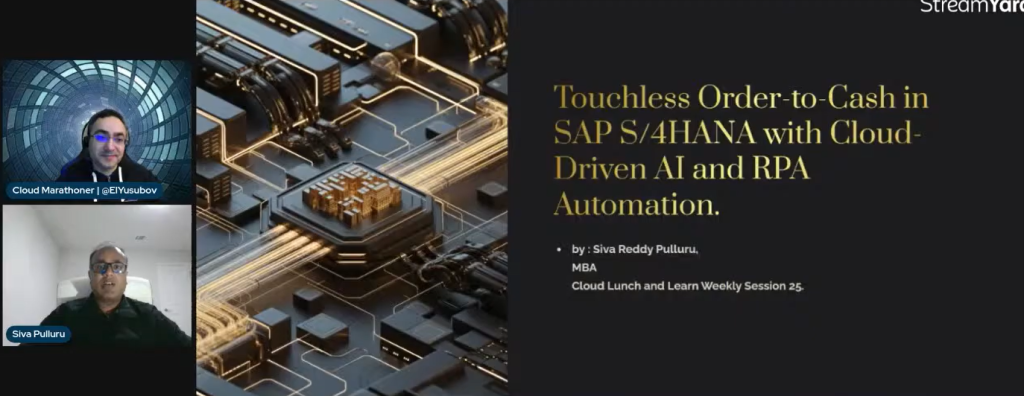
This week we had an informative Cloud Lunch and Learn session on SAP S/4HANA. Our speaker was Siva Pulluru. He has been working in SAP systems for almost 15 years, and specifically for the version of 4HANA he has been working on it in the last 5 years. Our speaker joined from the sunny Austin, TX.
Details of the session
The focus of the session is on how to enable touchless Order-to-Cash in SAP S/4HANA using AI, RPA, and cloud integration. This session covers real-time order ingestion via APIs and EDI, automated credit checks, pricing, and inventory with AI, and RPA-driven task automation. it outlines, actionable strategies for SAP BTP integration, exception handling, and innovations like blockchain and predictive analytics to boost accuracy, speed, and cash flow.
What IS covered?
Our speaker covered the steps when you are considering capturing the customer journey of transforming Order-to-Cash (O2C) into touchless experience. This involved understanding of Traditional O2C challenges and benefits, followed by architecture, real-time order ingestion, intelligent risk assessment with AI, and many other aspects.
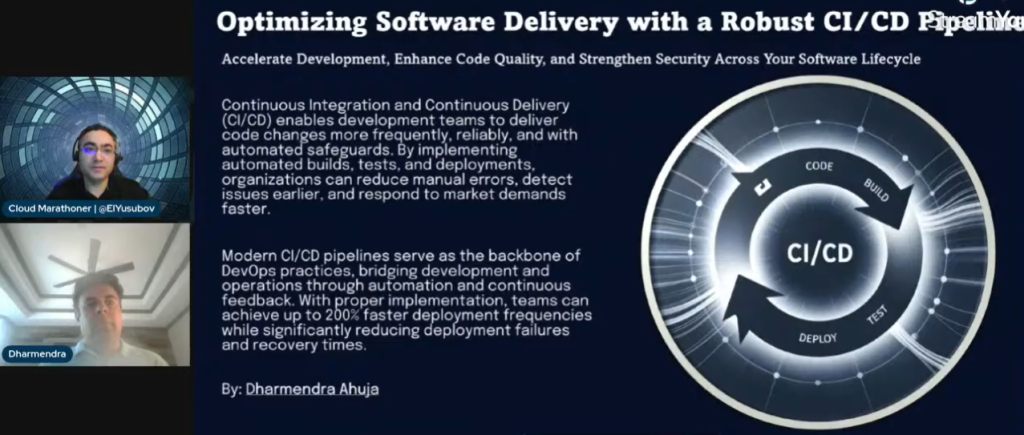
As the moderator, I had the pleasure of guiding an engaging conversation with our featured speaker, Dharmendra Ahuja—a multi-cloud Certified Solution Architect, DevSecOps, and Data Engineer with 18+ years of experience. Dharmendra’s expertise spans cloud-native architectures, CI/CD, containerization, and Infrastructure-as-Code, making him the perfect guide for this journey.
Best Practices for Scalable CI/CD Pipelines
Dharmendra shared actionable insights on designing pipelines that scale with your team and application needs. From modular pipeline stages to leveraging cloud-native tools, the focus was on building resilient, maintainable workflows.
Automated Testing & Build Automation
We explored how Jenkins and CircleCI streamline automated testing and build processes. Dharmendra emphasized the importance of integrating tests early and often, ensuring every code change is validated before deployment.
Deployment Strategies: Blue/Green & Canary
The session highlighted advanced deployment strategies:
Blue/Green Deployments: Minimize downtime and risk by switching traffic between identical environments.
Canary Releases: Gradually roll out changes to a subset of users, enabling real-time feedback and rapid rollback if needed.
DevSecOps Integration
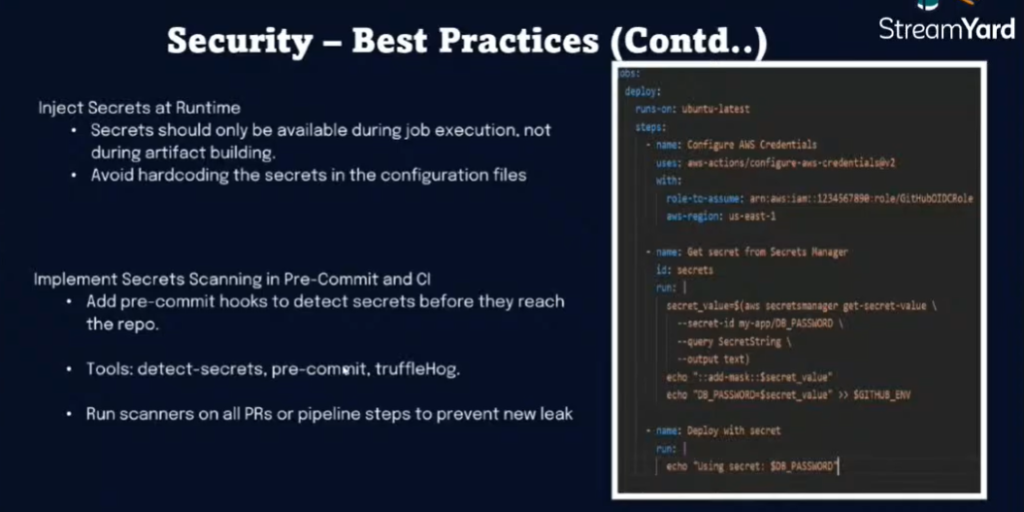
Security isn’t an afterthought—it’s baked into the pipeline. Dharmendra discussed proactive DevSecOps practices, from automated vulnerability scanning to policy enforcement, ensuring every release is secure by design.
Real-Time Monitoring with Prometheus & Datadog
Visibility is key! In this session, we learned how integrating Prometheus and Datadog provides real-time monitoring, alerting, and analytics—empowering teams to detect issues early and optimize performance.
Reducing Time-to-Market by Up to 40%
By adopting these best practices, organizations can dramatically reduce time-to-market, delivering value to customers faster without sacrificing quality or security.
Engaging Q&A
Throughout the session, I asked our presenter questions that sparked lively discussion:
How do you choose the right CI/CD tools for multi-cloud environments?
What are the biggest challenges in integrating security into pipelines?
Can you share a real-world example of a successful blue/green deployment?
Dharmendra’s responses were packed with practical advice and real-world stories, making the session both informative and inspiring.
Ready to Elevate Your DevOps Game and watch the full episode?
Whether you’re just starting your DevOps journey or looking to optimize your existing pipelines, the Cloud Marathoner community is here to support you. Let’s keep running toward cloud excellence—together!
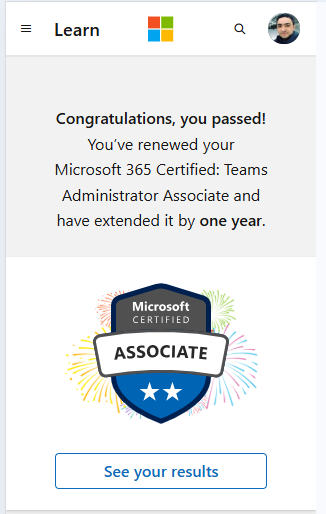
As a Cloud Marathoner, continuous learning is part of the journey. Recently, I renewed my Microsoft 365 Certified: Teams Administrator Associate certification, and I want to share the experience so you can prepare for yours.
Why Renewal Matters
Microsoft certifications are valid for one year, and renewal ensures your skills stay aligned with the latest updates in Microsoft Teams. The renewal process is free, online, and unproctored—perfect for busy professionals who want flexibility.
Eligibility: You can renew within six months before expiration.
Assessment: A short, open-book online assessment focused on recent Teams updates.
Skills Measured:
Implement compliance for Microsoft Teams
Lifecycle management and governance
Manage external access and Teams devices
Configure Teams Phone, auto attendants, and call queues
Manage apps and collaboration experiences for chat and channels
Attempts: Unlimited until expiration, with a 24-hour wait between retakes.
Validity: Passing extends your certification by one year.
Preparation Tips
Microsoft provides a curated learning collection (about 8 hours) to help you prepare. I recommend:
Reviewing Teams governance and compliance modules.
Practicing Teams Phone configuration scenarios.
Exploring device management and external access best practices.
Did i cleared the exam?
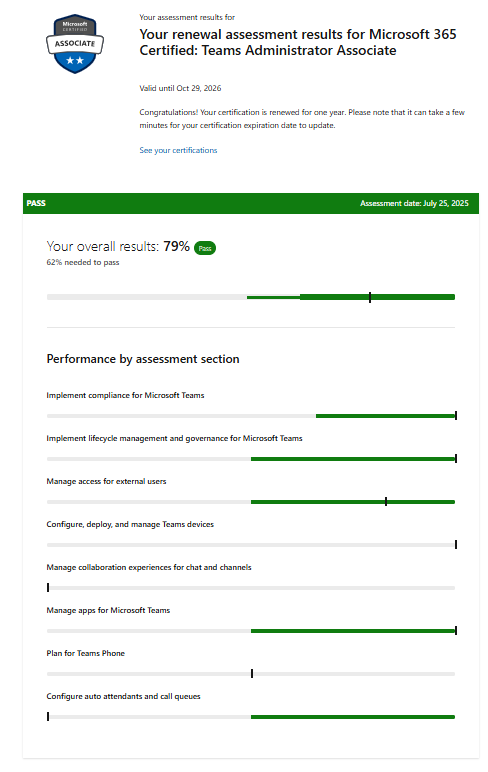
Well… not 100% flawlessly! 😅 While preparing for the renewal assessment, I discovered many new features and updates in Microsoft Teams—especially around management and governance. These changes reminded me that staying current is a continuous journey.
I had to catch up on several latest capabilities, and honestly, that was the most exciting part of the process. Despite all the odds, I managed to pass the assessment with a good score! 🎉
Here’s the reality check:
The renewal assessment highlighted areas where I need improvement.
Features like Manage collaboration experiences, advanced compliance settings and Teams phone deserve more attention in my learning plan.
And yes, I’ve got the screenshot from my exam results showing the points I should improve—because growth is all about transparency and learning forward.
Key Takeaways
Passing is great, but the real win is identifying gaps and planning your next learning sprint. That’s what makes us true Cloud Marathoners—always running toward knowledge, not just the finish line.
Are you planning to renew your Teams Admin certification soon?
Drop your thoughts in the comments or share your experience with the Cloud Marathoner community!